Ingredients
Equipment
Method
- Preheat your oven to 400°F and line a baking sheet with parchment paper. This creates a non-stick surface, making cleanup a breeze. While the oven heats, bring a large pot of salted water to a boil. Salting the water ensures the pasta is flavorful.
- Quarter and core the cauliflower, discarding the core. Slice the cauliflower into ¼-inch to ½-inch thick pieces. Place these slices on the lined baking sheet along with the unpeeled garlic cloves. Drizzle the cauliflower with olive oil, and season with two pinches of Kosher salt and several turns of freshly ground black pepper. Toss everything to combine, ensuring each piece is coated in flavor.
- Roast the cauliflower in the oven for about 20 minutes, flipping the pieces halfway through. You'll know it's done when it's tender and golden in spots. Season with additional Kosher salt to taste before setting it aside.
- Meanwhile, in a large skillet set over medium heat, warm some more olive oil. Add the peeled garlic, anchovy paste, and dried red chile flakes, cooking just until the garlic becomes fragrant. This should take about 1 to 2 minutes. Stir frequently to break up the anchovy paste and prevent the garlic from burning.
- Once your pot of water is boiling, add the spaghetti and cook until al dente or according to the package instructions. Al dente means the pasta should have a little chew left to it, ensuring it won't turn mushy when combined with the sauce.
- Add the crushed whole tomatoes (with their juices) to the skillet, along with the chopped kalamata olives and capers. Stir everything together, cooking for about 10 minutes, which should align perfectly with the time it takes for the spaghetti to cook.
- Before draining the spaghetti, reserve about ½ cup of the starchy pasta cooking water. This water is a secret weapon for binding the sauce to the pasta. Drain the spaghetti and return it to the pot.
- Add the roasted cauliflower, the tomato sauce from the skillet, and a splash of that reserved starchy cooking liquid. Toss everything together to combine, adding more starchy water as needed to achieve a cohesive sauce that clings to the spaghetti.
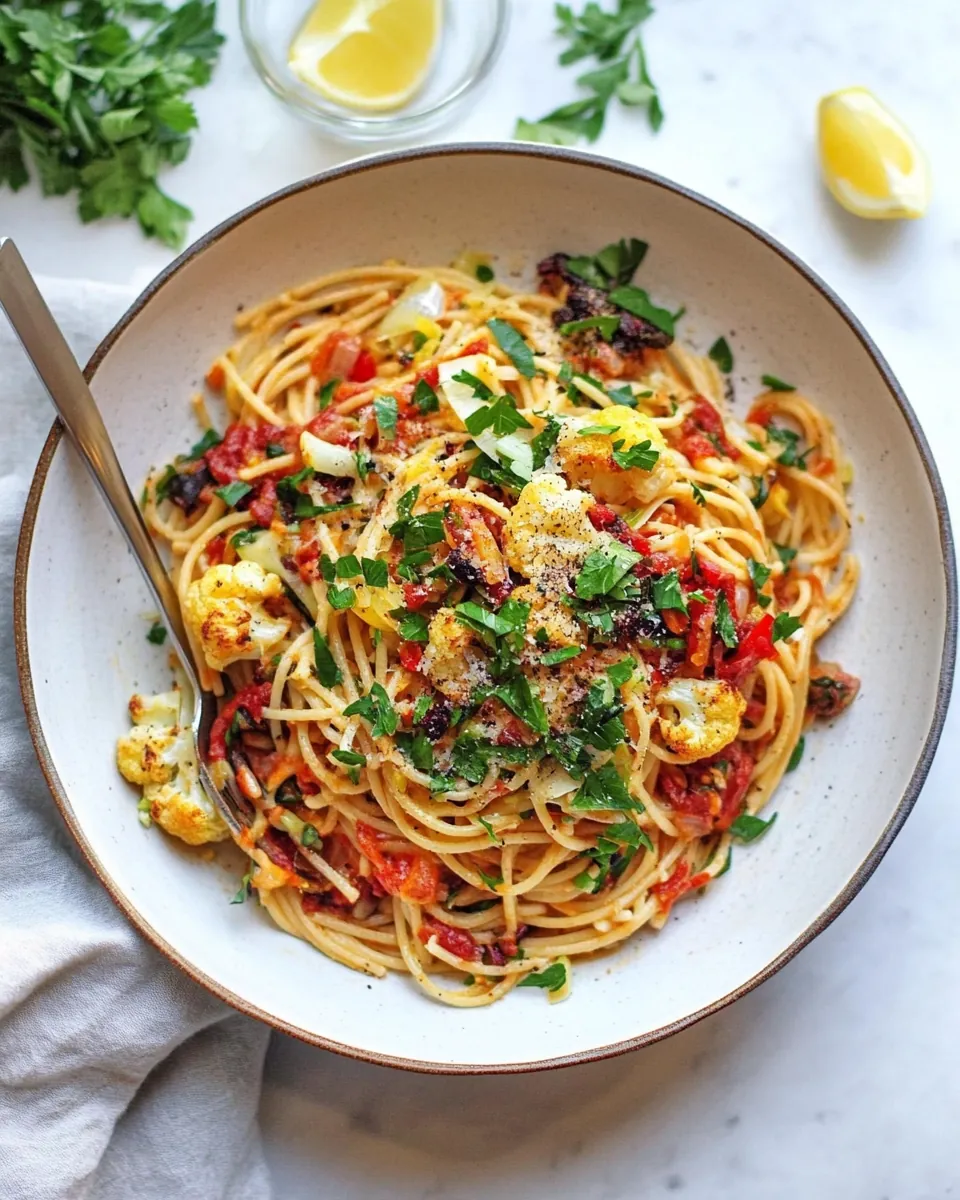
- Season the combined dish to taste with additional Kosher salt. Divide the spaghetti between four dinner plates, or two plates if you want to save some for leftovers. Top with freshly chopped parsley and additional black pepper. Serve with lemon wedges on the side for an extra zing!
Notes
Storing leftover Pasta Puttanesca in an airtight container in the refrigerator can keep it fresh for up to three days. Reheat gently on the stovetop with a little water to maintain moisture. It can also be frozen for up to three months. To serve, consider pairing it with garlic bread or a refreshing salad. Fresh herbs can elevate the dish, and you can experiment with different pasta shapes for variety.