In a mixing bowl, whisk together the flour, cornstarch, cream of tartar, baking soda, baking powder, ground cinnamon, ground nutmeg, ground ginger, salt, ground cloves, and ground allspice until thoroughly combined. Set aside. This mix creates the perfect base for your cookies.
In the bowl of an electric stand mixer fitted with the paddle attachment, cream together the unsalted butter and granulated sugar along with the brown sugar on medium speed until fluffy, about 2 minutes. You want a light, airy mixture that will help give your cookies their perfect texture.
On medium-low, mix in the egg yolk, followed by the pumpkin puree and vanilla extract. The batter should be smooth and look slightly orange in color due to the pumpkin.
Continue on low, slowly mix in the dry ingredients just until combined. You want to see the flour mixture disappear into the wet ingredients without overmixing. Give the dough a final stir by hand to scrape up any dough at the bottom of the bowl.
Cover the dough and chill for 3 hours or freeze for 45 minutes. Chilling the dough is crucial for thick cookies that hold their shape. If you’re in a hurry, freezing works well, too.
Preheat the oven to 350 degrees F. Line two baking sheets with parchment paper or silicone nonstick baking mats. This prevents the cookies from sticking and makes cleanup easier.
Whisk together the 1/4 cup granulated sugar and 1 teaspoon ground cinnamon in a small bowl; set aside. This mixture will give your cookies that signature snickerdoodle coating.
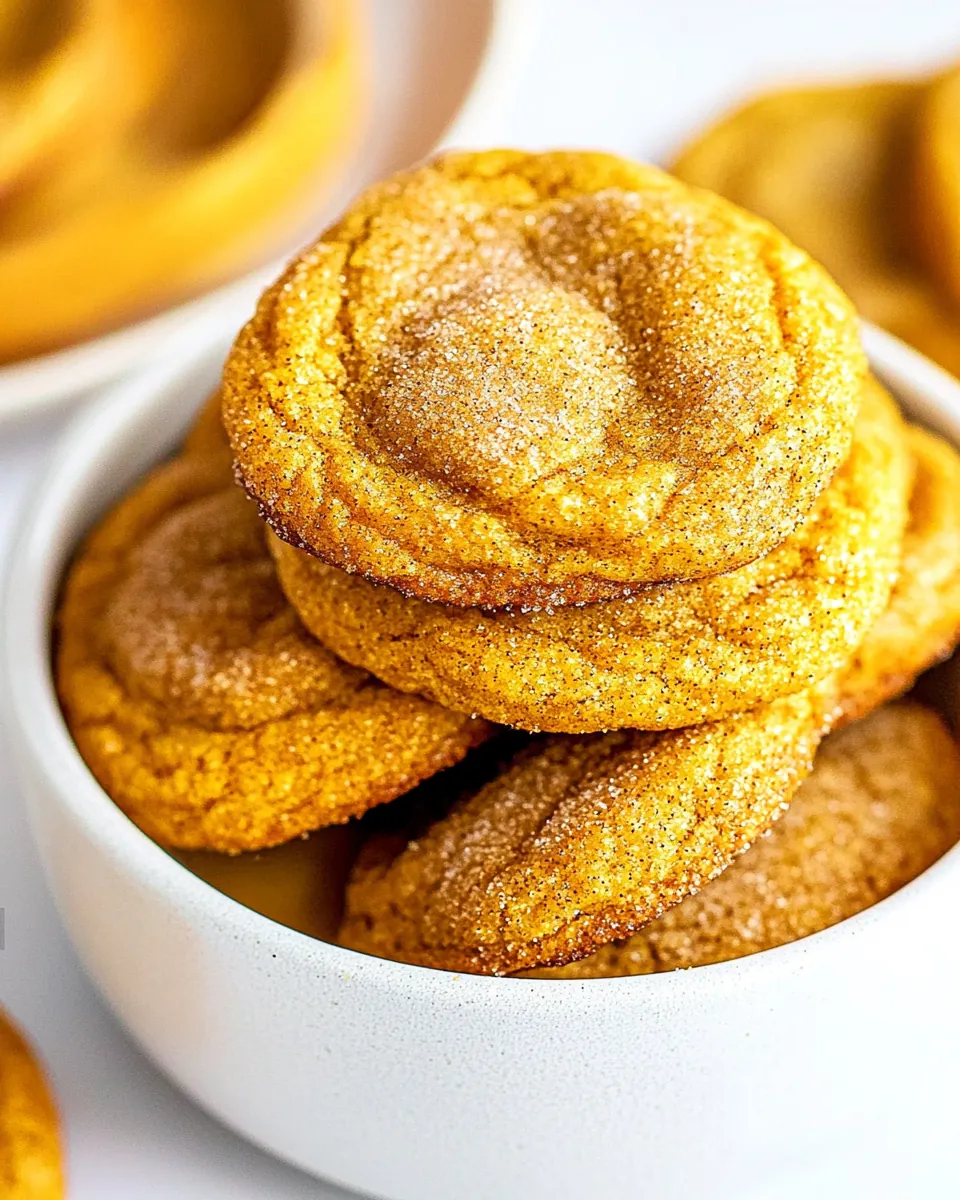
Using a 2-tablespoon cooking scoop, scoop the dough and roll it into a ball, then roll in the cinnamon sugar mixture to thoroughly coat. At this point, I like to roll the ball into a tall oval shape rather than a perfect circle to create thicker cookies.
Transfer the balls to the baking mat, spacing cookies 2 inches apart (about 6 per baking sheet). Refrigerate any dough you are not using at the time; colder dough equals thicker cookies!
Bake at 350 degrees F just until set and the tops are starting to crack (they should look slightly underbaked; they will continue cooking once removed from the oven). Baking times may vary depending on how cold your dough is, so plan on anywhere from 10 to 13 minutes.
Cool on the baking sheet for 5 minutes, then transfer to a wire rack to cool completely. If they aren’t really spreading by minute 9, remove them from the oven and lightly bang the baking sheet on the counter two to three times. This helps initiate that spread. Return to the oven to continue baking if needed.